Coney Island: The Last Great American Boardwalk

Coney Island has been called a lot of things — America's Playground, a punchline, a ghost of itself. None of those descriptions are quite right. Coney Island is a place that has been genuinely world-famous, genuinely broken, and genuinely still here. That track record earns some respect.
Before the Parks
The first hotels appeared at Coney Island in the mid-1800s, and by the 1880s it had become a destination for New Yorkers escaping summer heat. Horse racing, bathhouses, seafood. The infrastructure of leisure before electricity made it practical at scale.
The first roller coaster in the United States — LaMarcus Adna Thompson's Switchback Railway — opened at Coney Island in June 1884. Riders paid five cents. It did not go fast by modern standards. It was revolutionary anyway.
The Golden Age: 1903 to 1911
Between 1903 and 1904, two massive gated amusement parks opened at Coney Island and changed what an amusement park could be.
Luna Park opened in 1903. A million electric lights — at a time when most Americans had never seen electric lighting — turned it into something that looked like a city from the future. It drew a million visitors in its first year.
Dreamland opened in 1904, built by William Reynolds with an even larger footprint and a more theatrical sensibility. It burned to the ground in 1911. What survived was the legend.
The Cyclone, the wooden roller coaster that would become Coney Island's most enduring icon, opened in 1927. It was designated a New York City landmark in 1988. It still runs every summer.
Nathan's Famous opened in 1916 on the corner of Stillwell and Surf Avenues. Nathan Handwerker, a Polish immigrant who had worked for a competing hot dog stand, undercut his former employer by half. A nickel for a hot dog. The line never really stopped. Today Nathan's is a global franchise, but the original Coney Island location still stands at the same corner.
The Wonder Wheel — a Ferris wheel with swinging cars — opened in 1920 and has operated every season since. Also a New York City landmark.
What Happened in Between
The mid-20th century was hard on Coney Island. Robert Moses, New York's master builder and frequent destroyer, redirected development away from the area. The neighborhoods behind the boardwalk declined. The amusement industry contracted. By the 1970s, Coney Island had become shorthand for urban decay.
What it never became was gone. The Cyclone kept running. Nathan's kept selling hot dogs. The boardwalk stayed open. The D, F, N, and Q trains kept making Coney Island the final stop — the end of the line in every direction from the city, reachable by anyone with a MetroCard.
Coney Island Now
A new Luna Park opened in 2010. The beach still draws massive summer crowds. The freak show tradition — real, continuous, historically significant — survives at Coney Island USA on Surf Avenue. The Mermaid Parade happens every June.
What Coney Island is, at its core, is democratic. It was always built for the masses, not for the wealthy. That's why it lasted when the rest of the Gilded Age leisure economy didn't.
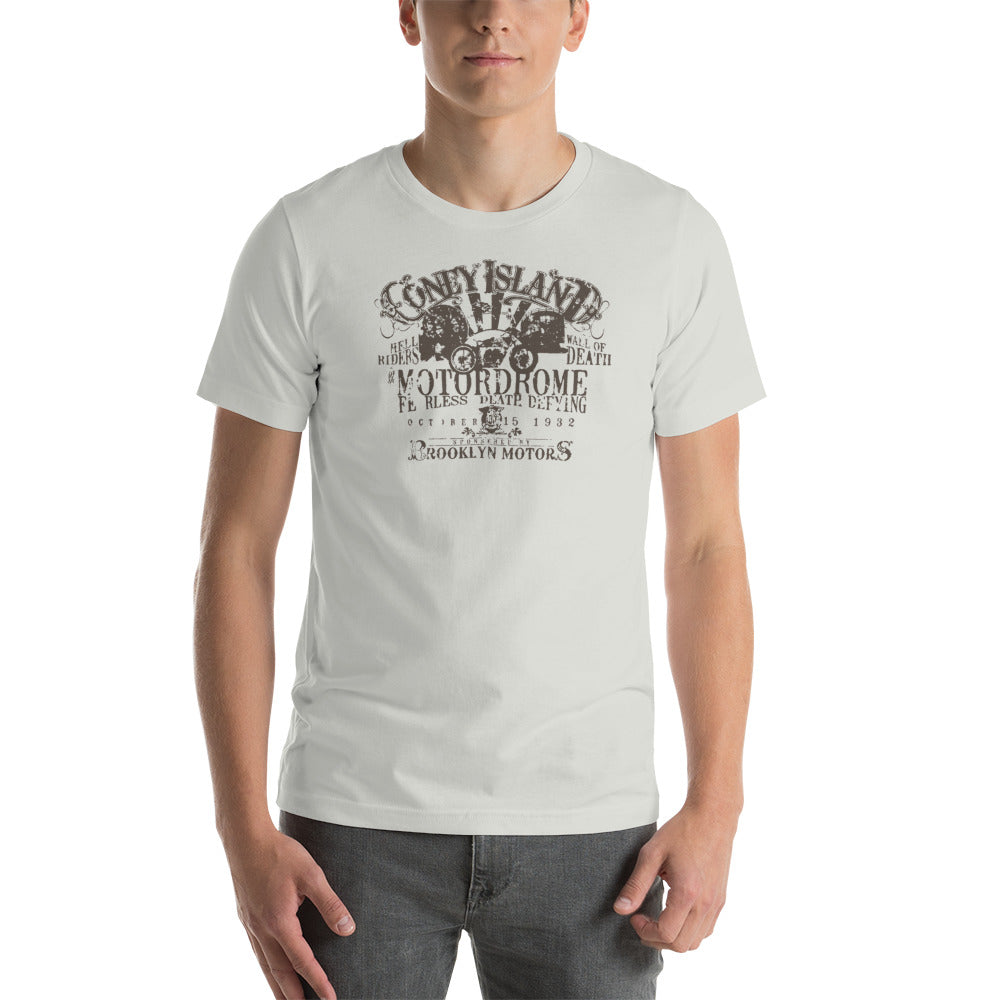
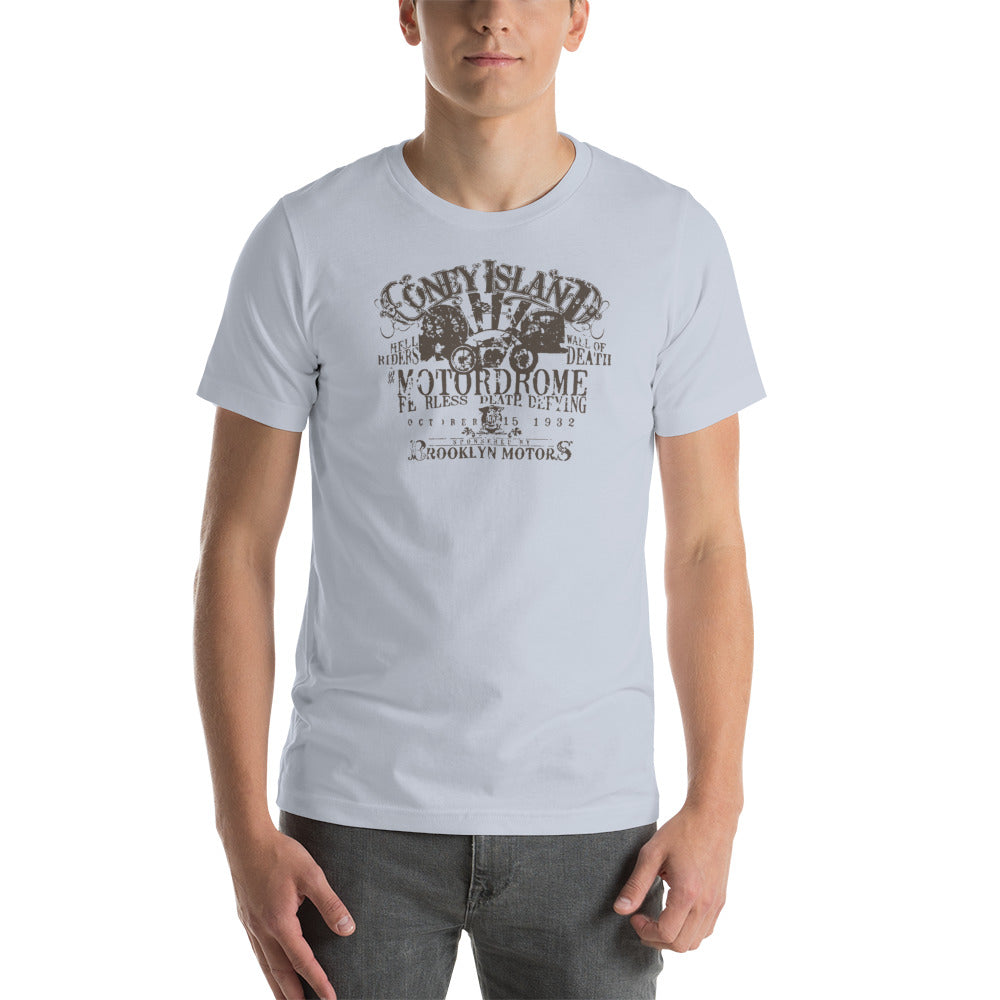
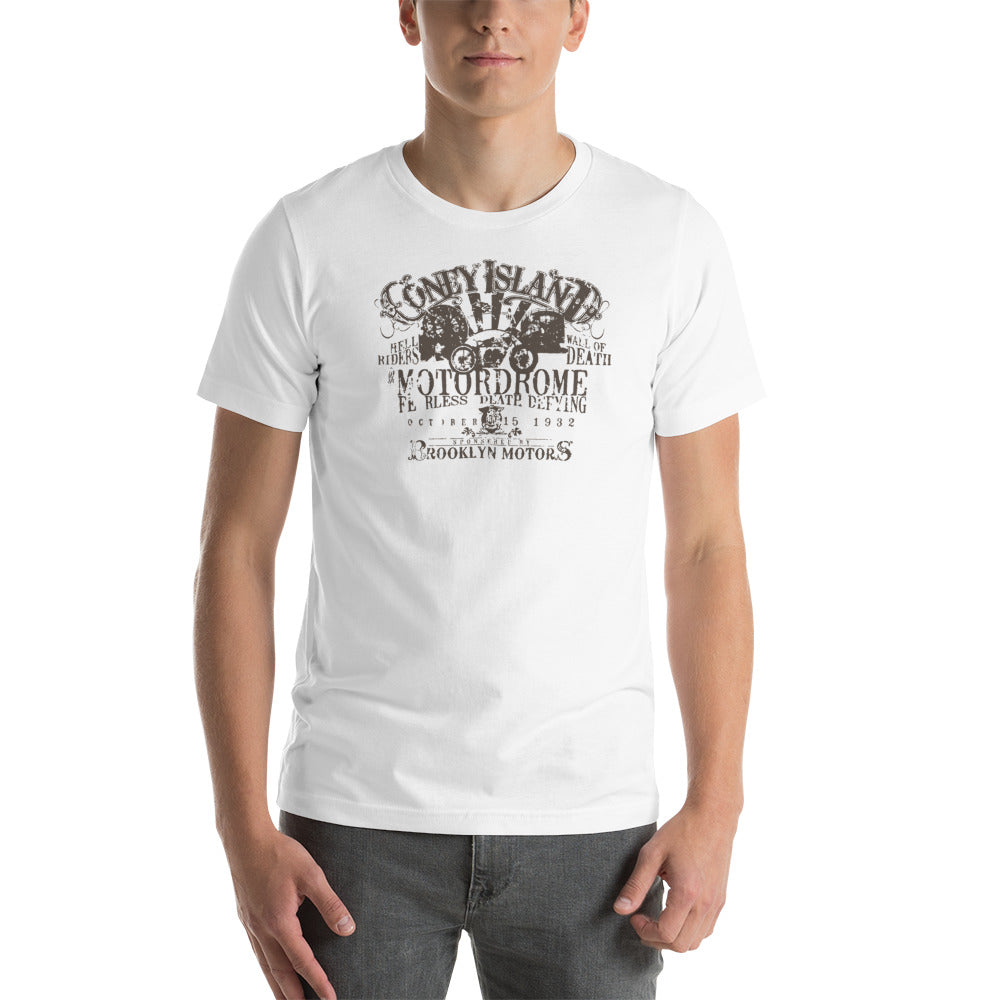
The Coney Island tee connects to that tradition — boardwalk culture, the working-class Brooklyn that claimed this place as its own, the specific energy of the end of the line on a summer Sunday.